Can Any Shop Mount Oversized Tires? Why the Right Equipment Makes All the Difference
Key Takeaways
Not every tire shop has the equipment to safely mount oversized, low-profile, or run-flat tires.
Standard tire mounting machines clamp onto the outer edge of the wheel, putting direct pressure on the rim and forcing stiff sidewalls in ways that can crack beads and scratch custom wheels.
A center mount tire machine clamps from the center hub, keeping all contact away from the rim surface entirely.
Oversized tires require proper balancing after mounting. Road force balancing is the most effective method for larger fitments.
Always ask a shop what tire machine they use before allowing them to touch your oversized or custom wheels.
Not Every Shop Is Equipped for Every Tire
If you are looking for a shop that can mount oversized tires, the answer is not as simple as finding the nearest tire center and pulling in. Equipment quality varies significantly between shops, and the machine a technician uses to mount your tires matters just as much as the tires themselves. The wrong equipment on a set of oversized, low-profile, or custom tires can crack a bead, scratch an alloy wheel, or leave a tire improperly seated before you ever pull out of the parking lot.
At any auto repair shop in Port Charlotte FL, it’s important to invest in a center mount tire machine specifically because the standard equipment most shops rely on is not up to the job for larger and more demanding tire fitments. This guide explains why that distinction matters and what to look for before trusting any shop with your wheels.
What Are Oversized Tires and Who Needs Them?
Oversized tires are tires larger than the manufacturer's standard fitment for a vehicle, commonly used on lifted trucks, SUVs, performance vehicles, and classic cars. They offer improved ground clearance, load capacity, traction, and in many cases a more aggressive appearance. Low-profile tires and run-flat tires fall into a related category that presents the same mounting challenges despite not always being physically larger.
Drivers who typically need oversized tire mounting include truck owners who have lifted their vehicles, SUV owners who have upsized for off-road capability, performance car owners running wide low-profile rubber, and classic car collectors fitting period-correct or custom wheels that do not match modern standard sizing.

Why Standard Tire Machines Struggle With Oversized Tires
Standard tire machines were designed for average passenger car tires and clamp onto the outer edge of the wheel during the mounting process. This puts direct pressure on the rim surface and forces stiff sidewalls over the bead seat in ways that work reasonably well for a standard commuter tire but create serious problems for anything larger, stiffer, or more valuable.
The Bead Damage Problem
The bead is the inner edge of the tire that creates an airtight seal against the wheel rim. On oversized and stiff-sidewall tires, the bead is under significantly more tension than on a standard passenger tire. When a standard machine forces that bead over the rim, it applies pressure in ways the tire was not designed to absorb, which can crack or deform the bead.
A damaged bead does not always announce itself immediately. The tire may hold air initially but develop a slow leak over days or weeks. In more serious cases a compromised bead can fail at highway speed, turning a mounting error into a safety emergency. The bead is not a component that can be repaired. A cracked bead means a replaced tire.
The Rim Scratch and Wheel Damage Problem
Standard tire machines clamp onto the outer edge of the wheel, which means the mounting arm makes direct contact with the rim surface during the process. On steel wheels this is manageable. On alloy, chrome, or custom painted wheels it leaves scratches, gouges, and scuff marks that are immediately visible and expensive to address.
Wheel refinishing costs typically range from $75 to $150 per wheel, and even professional refinishing rarely restores a wheel to a perfect factory finish. Prevention through the right equipment costs nothing extra. Repair after the fact almost always does.
What Is a Center Mount Tire Machine and Why Does It Matter?
A center mount tire machine clamps the wheel from the center hub rather than the outer edge, keeping all mounting contact away from the rim surface entirely. This design makes it the safest and most effective option for oversized tires, low-profile tires, run-flats, and any wheel where rim protection is a priority.
How a Center Mount Machine Works
Instead of gripping the outer lip of the wheel the way a standard machine does, a center mount machine uses a center post that locks into the hub of the wheel. The wheel is held securely from the inside out, and the mounting arm never touches the rim surface during the process.
This design also gives the machine significantly more leverage and range of motion when working with stiff sidewalls, which is where standard machines run into trouble with larger tires. The center mount approach distributes the force of mounting more evenly across the tire structure rather than concentrating it at the bead, which is exactly where damage occurs on a standard machine.
Which Tires and Wheels Benefit Most
Oversized truck and SUV tires. Larger diameter and wider tires exceed the safe operating range of most standard machines.
Low-profile performance tires. Stiff, short sidewalls require precise control during mounting that standard machines cannot reliably deliver.
Run-flat tires. Reinforced sidewalls make run-flats among the most difficult tires to mount. The wrong machine can damage the reinforcement structure.
Custom alloy and chrome wheels. Any wheel where rim contact during mounting is unacceptable.
Classic car wheels. Older rim profiles and non-standard sizing benefit from the center mount machine's flexibility and precision.
What Can Go Wrong When the Wrong Shop Mounts Your Oversized Tires?
Using a shop without the right equipment to mount oversized tires can result in cracked beads, scratched wheels, improper seating, and in serious cases a tire that fails at speed.
The four most common problems that result from improper mounting equipment:
Cracked or pinched bead. Causes slow air loss, an unstable seal, or in serious cases a blowout under load.
Scratched or gouged alloy wheels. Visible immediately or after the tire is removed. Costly to refinish and impossible to fully conceal on polished or chrome surfaces.
Improperly seated tire. A tire that is not fully seated on the bead causes vibration, uneven wear, and handling problems that are often misdiagnosed as a balancing issue.
Hidden air pressure loss. A compromised seal that holds pressure initially but loses it gradually, leaving the driver unaware until the tire is dangerously underinflated.
What to Ask a Tire Shop Before You Hand Over Your Wheels
Before letting any shop mount your oversized or custom tires, ask what type of tire machine they use and whether it is rated for your specific tire size and wheel type. Here are the five questions worth asking:
What tire machine do you use?
A center mount machine is the answer you are looking for on oversized or custom fitments.Is your equipment rated for my tire diameter and width?
Machines have maximum size ratings. Confirm yours falls within range.Do you have experience mounting low-profile or run-flat tires?
Experience with demanding tire types matters as much as equipment.How do you protect alloy or custom wheels during mounting?
Protective inserts and careful technique should be standard practice.Do you offer balancing after mounting, and what type?
Road force balancing is the preferred method for oversized fitments.
Oversized Tires and Balancing: Why Road Force Balancing Completes the Job
Mounting oversized tires correctly is only half the job. Larger and heavier tires introduce more force variation than standard tires, meaning the stiffness of the tire itself can cause vibration even when the wheel is perfectly balanced in the traditional sense.
Road force balancing simulates the weight of the vehicle pressing down on the tire as it rolls, identifying force variation and stiff spots that standard spin balancing in the air cannot detect. For oversized tires on trucks and SUVs, this step is what separates a smooth ride from a persistent steering wheel shimmy that no amount of standard balancing will fully resolve. When searching for a shop that mounts big tires, make sure they cover both services together because one without the other leaves the job half done.
Tire Mounting for Trucks and SUVs in Port Charlotte
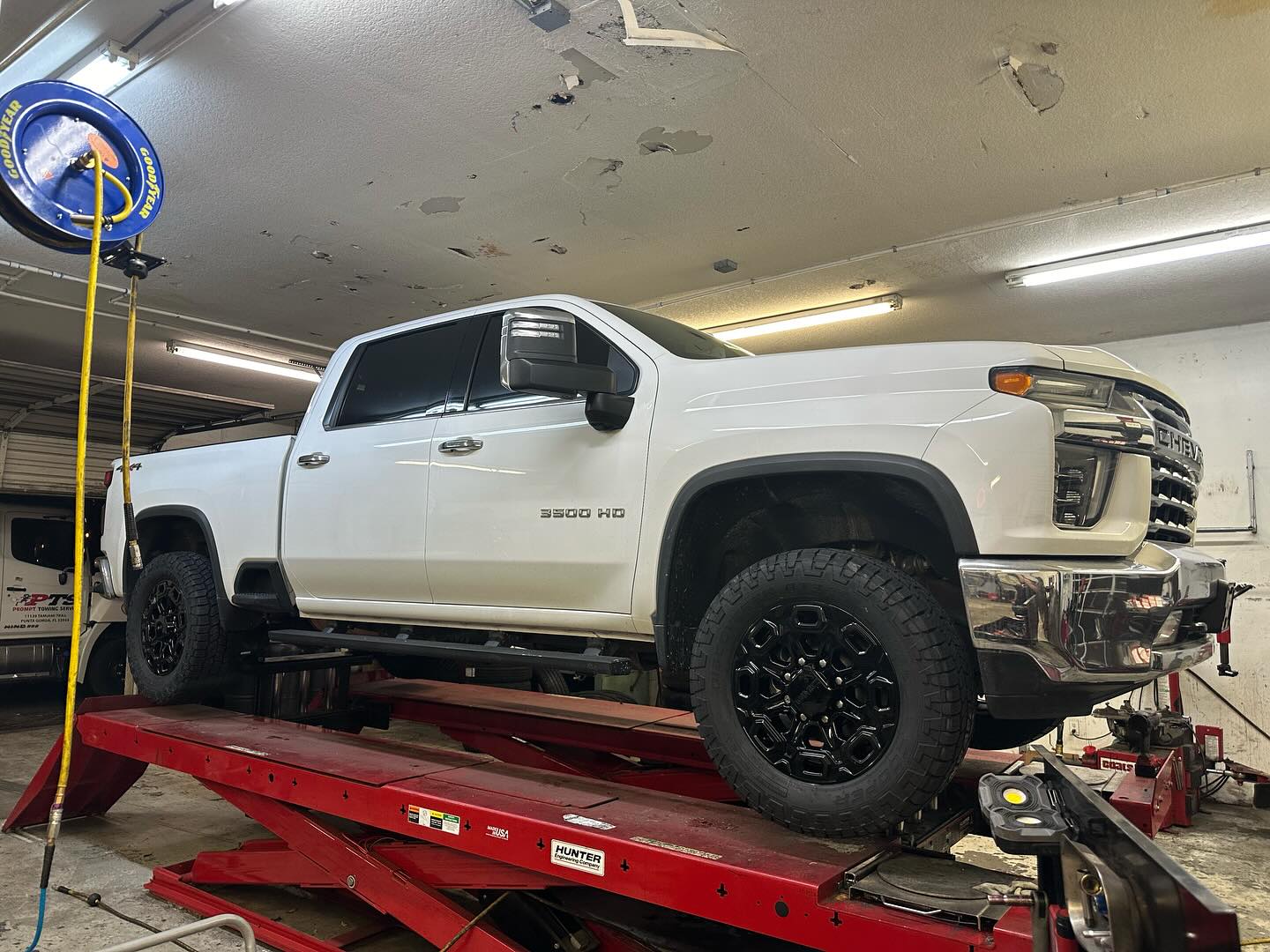
Trucks and SUVs are by far the most common vehicles needing oversized tire mounting in the Port Charlotte and Charlotte County area. Southwest Florida's roads and the popularity of lifted and modified trucks in this region mean that demand for proper large-format tire service is high, and the gap between shops that can handle it and shops that cannot is meaningful.
Tom Joyce Automotive is fully equipped to handle oversized tire mounting and road force balancing for the full range of truck and SUV fitments common in this area. If you are ready to book, you can schedule a tire service appointment online, and we will make sure your tires are mounted and balanced correctly from the first visit.
Conclusion: The Right Equipment Is Not Optional, It Is Essential
Finding a shop that can mount oversized tires safely is not about being particular. It is about protecting an investment that in many cases runs into thousands of dollars between the tires and the wheels themselves. The equipment a shop uses directly determines whether your tires are seated correctly, your wheels come back undamaged, and your vehicle drives the way it should after the service is done.
Port Charlotte drivers with oversized, low-profile, or custom tire fitments deserve a shop with the right tools for the job. Tom Joyce Automotive has been that shop for Charlotte County since 1993