Can I Drive My Car With the Check Engine Light On? What You Need to Know
Key Takeaways
A solid check engine light means a fault has been detected. It is not always an emergency but should be diagnosed within a few days.
A flashing check engine light means stop driving as soon as safely possible. It typically signals an active engine misfire that can destroy a catalytic converter within minutes.
The most common causes are a faulty oxygen sensor, loose gas cap, failing catalytic converter, bad mass airflow sensor, or worn spark plugs.
Ignoring a check engine light does not make the problem go away. It almost always makes it more expensive.
A free scan at an auto parts store gives you a code. A professional diagnostic tells you what that code actually means for your specific vehicle.
That Little Light Is Trying to Tell You Something
The question of whether you can drive with the check engine light on is one of the most common things drivers search for, and for good reason. That small amber light appears without warning, offers no explanation, and leaves most people wondering whether they are fine to keep driving or whether they should pull over immediately.
The honest answer is that it depends. The check engine light covers a wide range of issues, from a loose gas cap to an active engine misfire, and how you should respond depends entirely on what the light is doing and how the car is behaving. At our auto repair shop in Port Charlotte, this is one of the most common concerns we hear from drivers, and the guidance is always the same: do not ignore it and do not guess.
What Does the Check Engine Light Actually Mean?
The check engine light comes on when your vehicle's onboard diagnostic system detects a fault in the engine, emissions, or a related system. It does not mean the engine is about to fail, but it does mean something needs attention.
Your car's OBD-II system continuously monitors dozens of sensors and components. When a reading falls outside the expected range, the system stores a fault code and triggers the warning light. That code points toward a system or component but does not always identify the exact cause on its own. The only way to know what triggered the light is to have the stored code read and interpreted by a qualified technician.
Solid Check Engine Light vs. Flashing Check Engine Light
A solid check engine light indicates a stored fault that needs diagnosis but is not usually an immediate emergency. A flashing check engine light means a serious problem is actively occurring and you should stop driving as soon as it is safely possible.
Understanding the difference between these two signals is the most important thing any driver can know about the check engine light.
Solid Check Engine Light: Urgent but Not Always an Emergency
A steady, solid check engine light means your vehicle has detected and stored a fault code. In many cases the car will continue to drive normally and the underlying issue, while real, is not causing immediate damage. Common causes of a solid light include a loose gas cap, a failing oxygen sensor, or an EVAP system leak.
That said, urgent does not mean dismissible. A solid check engine light that goes unaddressed for weeks can allow a manageable problem to develop into a more serious one. Plan to have it diagnosed within a few days.
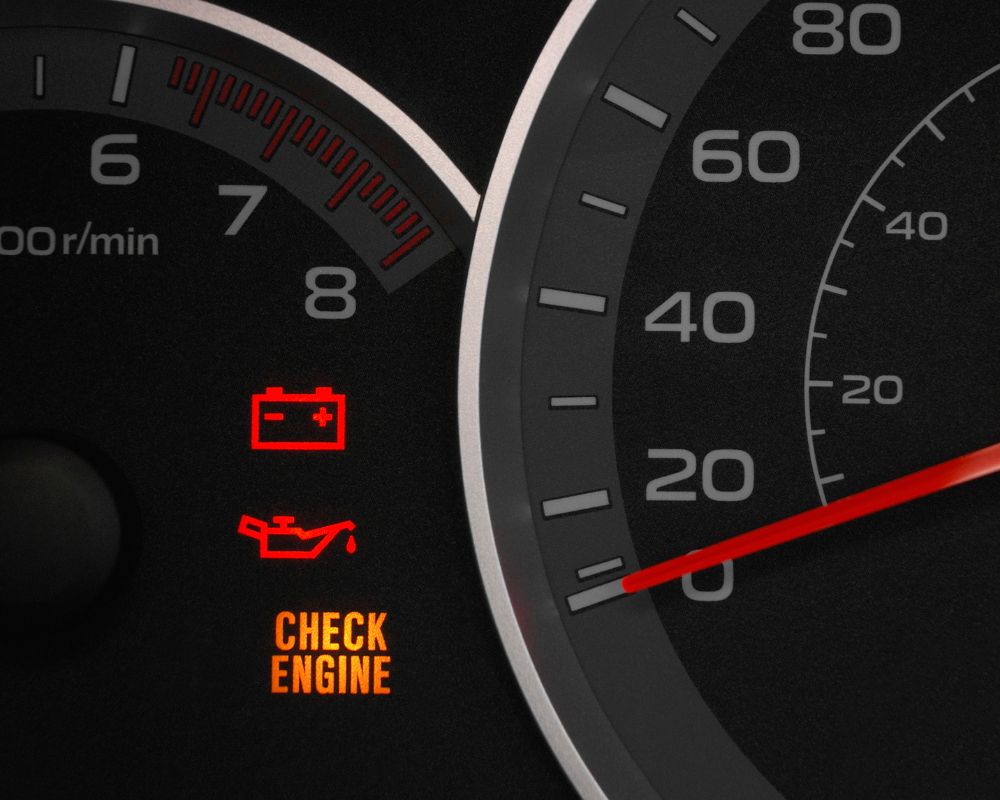
Flashing Check Engine Light: Stop Driving as Soon as It Is Safe
A flashing or blinking check engine light is a different situation entirely. This almost always indicates an active engine misfire, meaning one or more cylinders are firing incorrectly or not at all. Unburned fuel is being pushed into the exhaust system, and at operating temperatures that fuel can destroy a catalytic converter in a matter of minutes.
If your check engine light is flashing, reduce your speed, avoid hard acceleration, and find a safe place to stop as soon as possible. Continuing to drive can turn a repair that might cost a few hundred dollars into one that costs significantly more.
Can I Drive With the Check Engine Light On?
Whether you can drive with the check engine light on depends on whether the light is solid or flashing and whether any other symptoms are present. A solid light with no other warning signs is generally safe for short-term driving. A flashing light or any accompanying symptoms means stop as soon as it is safe to do so.
When It May Be Safe to Drive Short Term
You may be okay to continue driving for a short period if all of the following are true:
The check engine light is solid, not flashing
No other warning lights are illuminated alongside it
The car drives normally with no loss of power or rough idle
There is no smoke, burning smell, or unusual noise from the engine
The temperature gauge and oil pressure readings are normal
Even in this scenario, short-term means days, not weeks. Book a diagnostic promptly and keep your trips brief until the cause is confirmed.
When You Should Pull Over Immediately
Stop driving as soon as it is safe if you notice any of the following:
The check engine light is flashing or blinking
The oil pressure or engine temperature warning light is also on
The car is running roughly, misfiring, or losing power
You smell burning or see smoke from under the hood
The car stalls or struggles to stay running
You hear knocking, grinding, or unusual noises from the engine
Any one of these alongside the check engine light changes the situation from a scheduled diagnostic to an immediate stop.
The Most Common Reasons the Check Engine Light Comes On
The most common reasons a check engine light comes on are a faulty oxygen sensor, a loose or damaged gas cap, a failing catalytic converter, a bad mass airflow sensor, worn spark plugs, or an EVAP system leak. Here is what each typically involves:
Oxygen sensor failure. One of the most common triggers. A faulty O2 sensor affects fuel efficiency and emissions and can damage the catalytic converter if left unaddressed. Repair cost: $150 to $500 depending on location and vehicle.
Loose or damaged gas cap. The simplest fix on this list. A loose cap allows fuel vapors to escape, triggering an EVAP fault. Tighten or replace the cap and the light often clears on its own within a day or two.
Catalytic converter failure. Usually a downstream effect of another ignored problem. One of the more expensive repairs on this list. Repair cost: $500 to $2,000 or more.
Mass airflow sensor. Affects how the engine calculates fuel delivery. Symptoms include rough idle, poor acceleration, and reduced fuel economy. Repair cost: $200 to $400.
Spark plugs or ignition coils. Worn plugs or a failing coil causes misfires, which can also trigger a flashing light. Repair cost: $100 to $400 depending on engine configuration.
EVAP system leak. Usually a minor emissions fault but worth addressing to avoid a failed inspection. Repair cost: $100 to $600 depending on the source of the leak.
What Happens If You Ignore the Check Engine Light?
Ignoring a check engine light rarely makes the underlying problem go away. In most cases it allows a minor fault to develop into a more serious and expensive repair.
Three things commonly happen when the light is ignored for too long. First, the original fault worsens and causes secondary component failure, such as a bad oxygen sensor that eventually damages the catalytic converter. Second, the stored codes accumulate and make diagnosis more complicated and time-consuming. Third, in Florida, an active check engine light is an automatic failure on an emissions inspection, which means you cannot legally renew your registration until it is resolved.
Can I Just Reset the Check Engine Light Myself?
You can reset a check engine light by disconnecting the battery or using an OBD-II scanner, but resetting the light without fixing the underlying fault means it will return. Clearing the code also erases your vehicle's readiness monitors, which your car needs to pass an emissions test.
Readiness monitors are internal self-checks your vehicle runs as you drive. After a reset, it can take several days of varied driving to complete all of them. If you clear the code and then take the car in for an emissions test too soon, it will fail even if the original fault is gone. Resetting without repairing is not a solution. It is a delay that often complicates the situation further.
What to Expect at a Professional Diagnostic
A professional car diagnostic is straightforward and typically takes between 30 and 60 minutes. Here is what the process looks like:
A technician connects a professional-grade scan tool to your vehicle's OBD-II port.
All stored and pending fault codes are retrieved and recorded.
Live sensor data is reviewed to identify abnormal readings.
A visual inspection of relevant components is performed.
The technician explains what the codes mean for your specific vehicle and outlines the recommended repair.
This is meaningfully different from a free code read at an auto parts store, which gives you a code number but no interpretation or inspection. Knowing the code is the starting point. Understanding what caused it and what needs to be done is the actual diagnosis.
You can schedule a car diagnostic appointment online at Tom Joyce Automotive to ask any questions before you come in.
Conclusion: Do Not Guess, Get It Checked
The answer to whether you can drive with the check engine light on is never a simple yes or no. A solid light with no other symptoms gives you a short window to get it looked at without panic. A flashing light, rough running, or any other warning sign alongside it means act now.
What stays true in every scenario is that the check engine light exists for a reason, and the cost of diagnosing it early is almost always far less than the cost of ignoring it. Charlotte County drivers can contact a mechanic with Tom Joyce Automotive and get a clear, honest answer from a team that has been serving this community since 1993.